 Liam ScottVIEW PROFILE →
The Robots Clocked In: Humanoids Reached the Factory Floor in 2026 , Just Not the Way the Hype Promised
Tesla, Figure and China's Unitree finally put walking robots to work on real assembly lines this year. The reality is more modest, and more interesting, than the science-fiction pitch.
For years, the humanoid robot has been technology's favourite promise and its most reliable disappointment. Every few months a slick video showed a two-legged machine folding laundry or striding across a stage, and every time the real world stubbornly refused to fill up with mechanical workers. In 2026, something genuinely shifted: the robots finally clocked in for real work, even if the reality looks nothing like the science-fiction sales pitch.
This was the year humanoids crossed the line from laboratory demonstration to actual factory floor. That is a real milestone, but it comes wrapped in a crucial caveat that the breathless hype tends to skip over, and understanding the gap between the two is the key to seeing where this technology actually stands.
What actually happened on the assembly line
The most visible player is Tesla, whose Optimus robot has become the face of the movement. By the middle of 2026 the company had somewhere in the region of a thousand to twelve hundred units deployed across its plants in Fremont, California, and near Austin, Texas, putting real hardware in real buildings rather than just on stage.
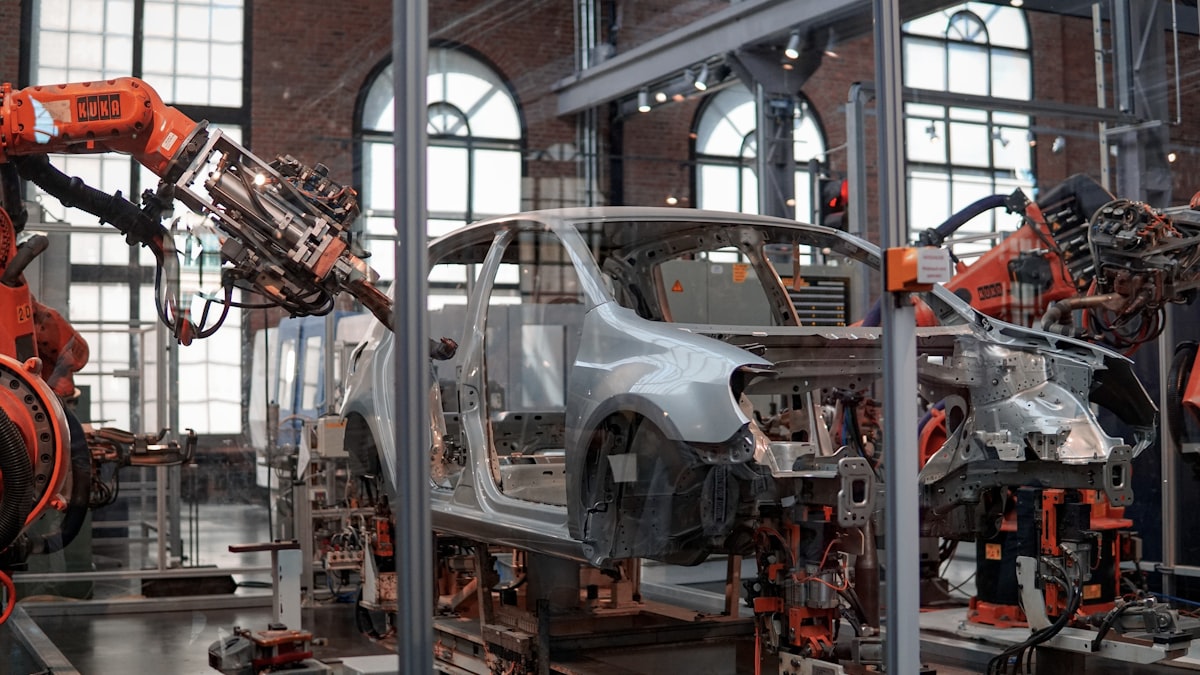
Tesla is using those robots inside its own car factories to do genuinely useful grunt work, moving heavy parts and carrying tools around the production line. The company was serious enough about the effort that it ended Model S and Model X production at Fremont in early May and spent four months converting that line to assemble Optimus itself.
Yet even Tesla is refreshingly blunt about the limits. It reports no external sales of the robot, and the company's own leadership has described the deployed units as being primarily for learning and data collection rather than for reliably performing productive tasks. In other words, the robots are on the floor mostly to learn the job, not yet to own it.
Tesla is far from alone. Rivals including Figure and Apptronik, maker of the Apollo robot, have been shipping units to industrial pilot customers, and Figure notably sent its machines to a BMW assembly plant in South Carolina to help build cars. The pattern across the industry is the same: carefully controlled pilots, not wholesale replacement of human workforces.
China's cheaper, quieter surge
While the Western giants grab headlines, the most striking volume story is unfolding in China. The firm Unitree now ships more humanoid robots than any Western competitor, and it does so at roughly a tenth of the price, a combination that could prove decisive in a market where cost will ultimately determine mass adoption.
That price advantage matters enormously. A robot that is merely impressive is a research project; a robot that is cheap enough to buy by the thousand is an industrial input. Unitree's approach hints at a future where the humanoid market splits between premium Western systems and high-volume, low-cost Chinese machines, echoing patterns seen across earlier waves of hardware.
The economics are not effortless even for the volume leader, however. Unitree's profit in the first quarter of 2026 still fell by half, a reminder that shipping large numbers of humanoids and actually making money from them remain two very different challenges in these early days of the industry.
Reality check versus revolution
So how should we read 2026? Honestly, as the year the technology graduated from theory to trial. Walking robots are now doing real, if narrow, tasks in real workplaces, which is a meaningful advance over the endless demo videos of the preceding years and a genuine proof of concept.
But it is emphatically not the year the robot workforce arrived. Deployments are measured in the hundreds and low thousands, most units are still learning rather than earning their keep, and the machines remain confined to structured, predictable environments like assembly lines where the work is repetitive and the surroundings are controlled.
The hard problems that separate a factory pilot from a household helper, dexterity, reliability, safety around unpredictable humans and sheer cost, are still very much unsolved. A robot that can carry a tool across a Tesla plant is a world away from one you would trust to move freely through a busy home or a crowded shop.
Still, the direction is now unmistakable, and that is what makes this moment significant. The debate has finally shifted from whether humanoid robots can do real work to how quickly, how cheaply and how widely they will spread. 2026 did not deliver the robot revolution, but it did quietly prove that the revolution has, at last, actually begun.